
July 23, 2026
Proof you can't find isn't proof
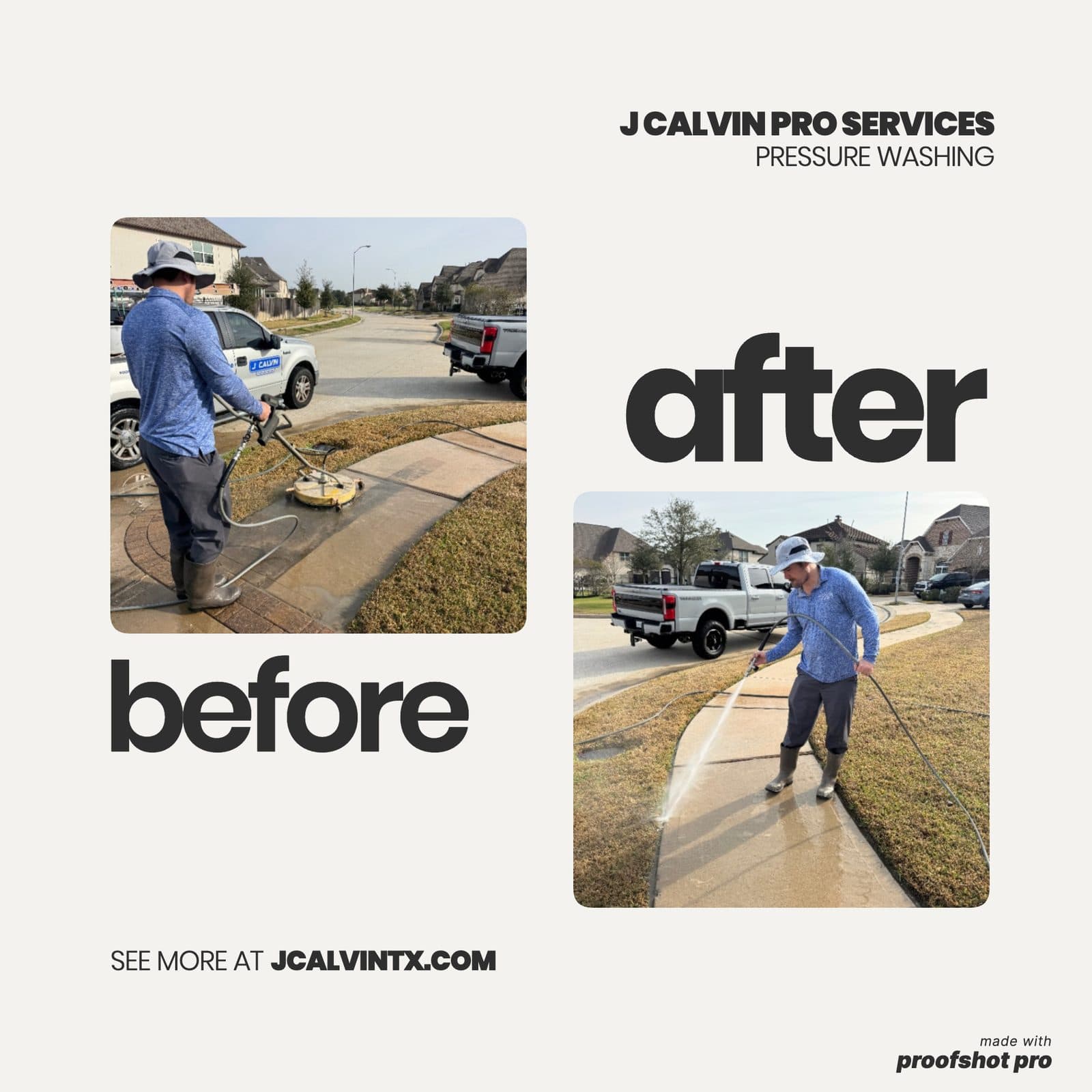
The job was a driveway cleaning. When we finished, I snapped the before and the after, sent both to the customer in one text with a link to our Google review page, and asked for one favor: if you leave a review, would you attach these two photos?
"Awesome thank you! And will do!"
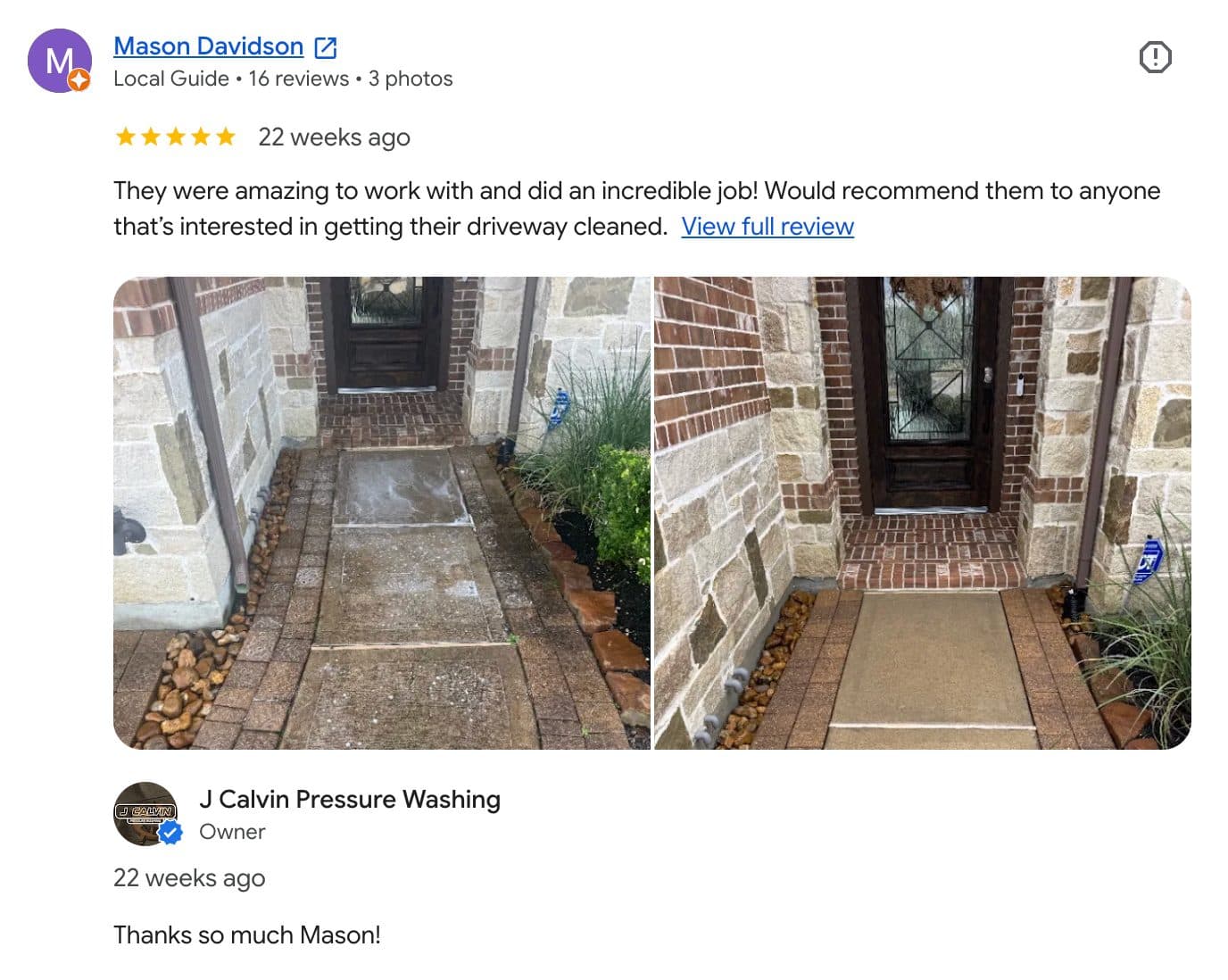
And he did. A five-star review with the before-and-after sitting right in it — the work doing its own talking, right on our Google listing where people go to size us up.
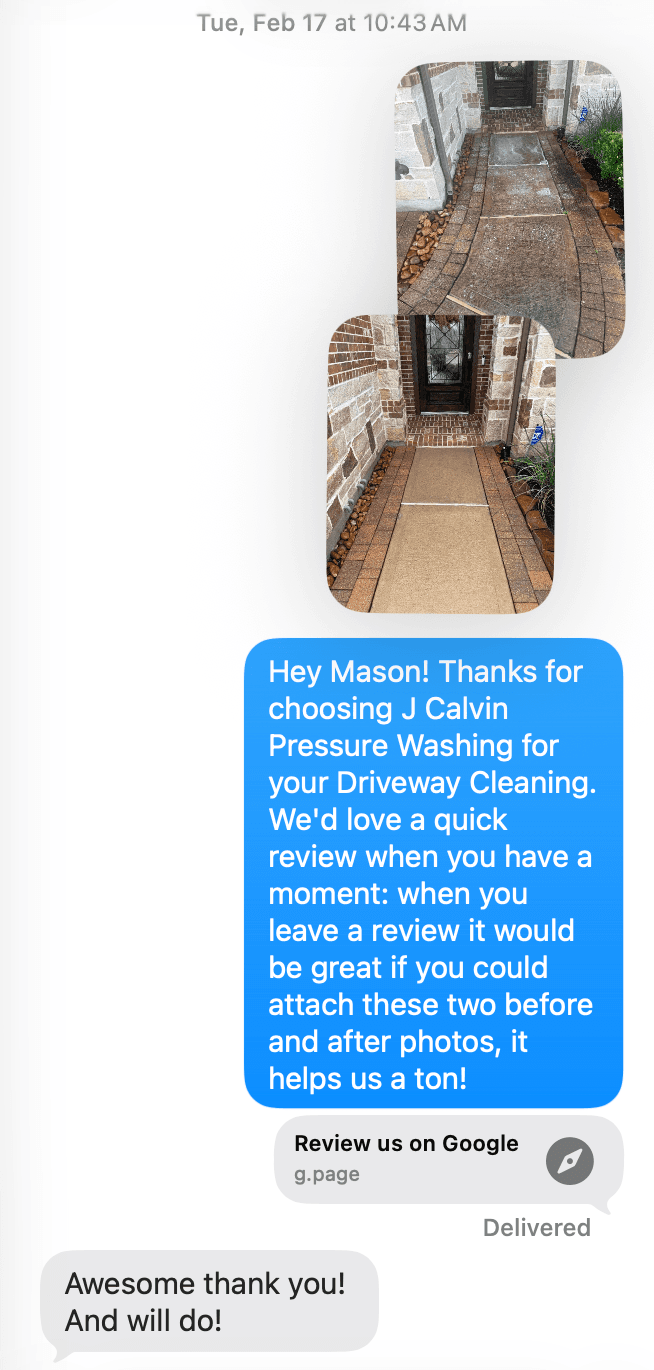
For most of the life of our pressure washing business, that little exchange was out of reach. Not because we didn't have the photos. Because we couldn't find them.
Where the photos used to go
Our washing business has no crews — my business partner and I do every job ourselves. So every job's photos landed in one of three places: my photos app, mixed in with everything else; a text thread, buried under everything we'd sent since; or his phone, which might as well be another zip code.
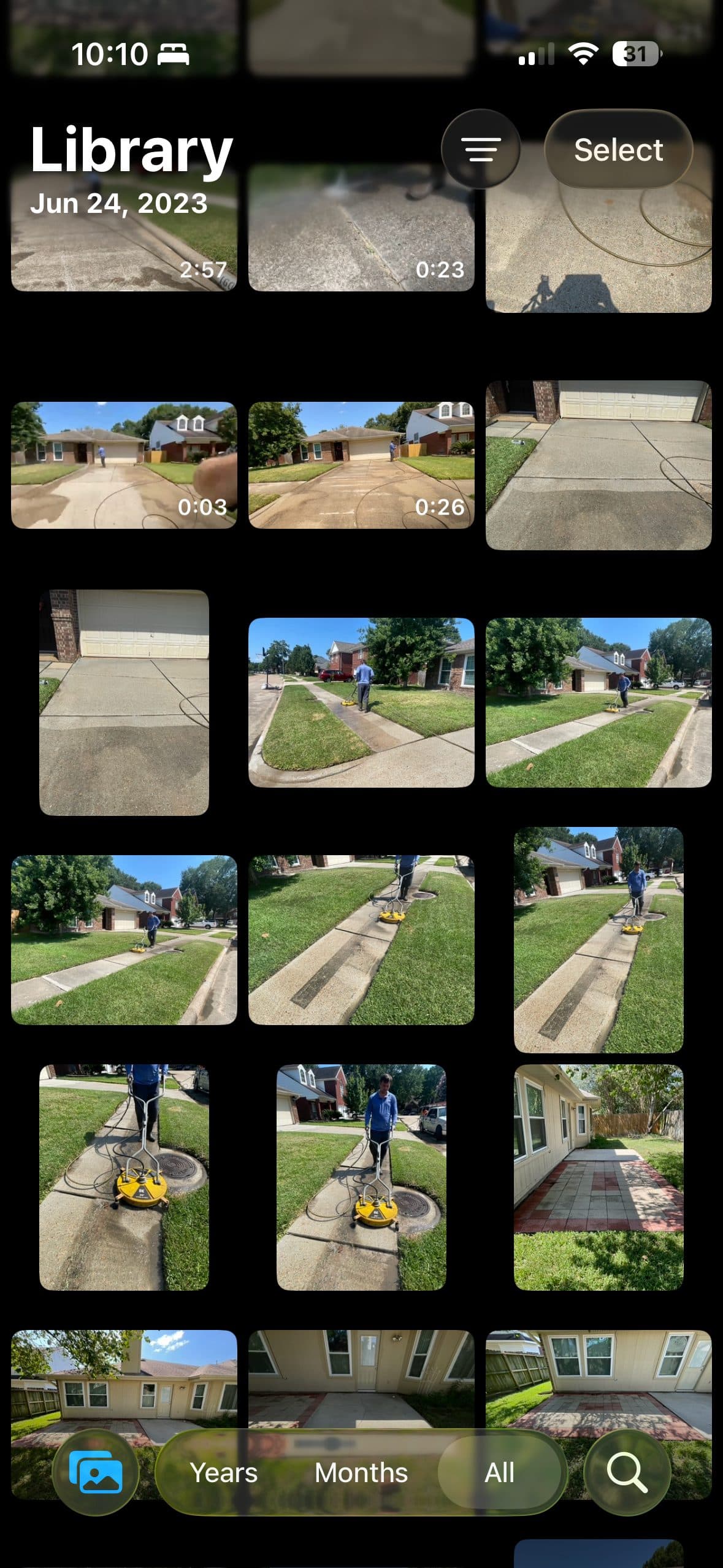
Nobody ran a stopwatch on what that cost, so I won't hand you a number. This part is memory: a potential customer wants to see work like theirs — and I know we've done it — and I'm thumb-scrolling months of camera roll trying to surface it. Sometimes I found it. Plenty of times I gave up and sent something less than ideal, or put a weaker photo on the website because it was the one I could locate. The best proof we had mostly stayed buried.
The wrong diagnosis
The obvious fix treats it as a photo problem: take more photos, take better ones, get disciplined about albums, buy more storage. We had plenty of photos — pressure washing photographs itself. Discipline wasn't it either; a filing system you have to maintain by hand after a twelve-hour day is a system you'll stop maintaining.
The real problem was retrieval. The photo exists, somewhere, and at the moment a customer is deciding, "somewhere" is worth nothing. Proof you can't find isn't proof.
So we built the thing we couldn't buy
This year we built ourselves an app. Not a photo vault — a retrieval system that starts at the job site:
- Photos are taken into a project, not a camera roll. The job is the folder, so finding a job's photos stops being an act of archaeology.
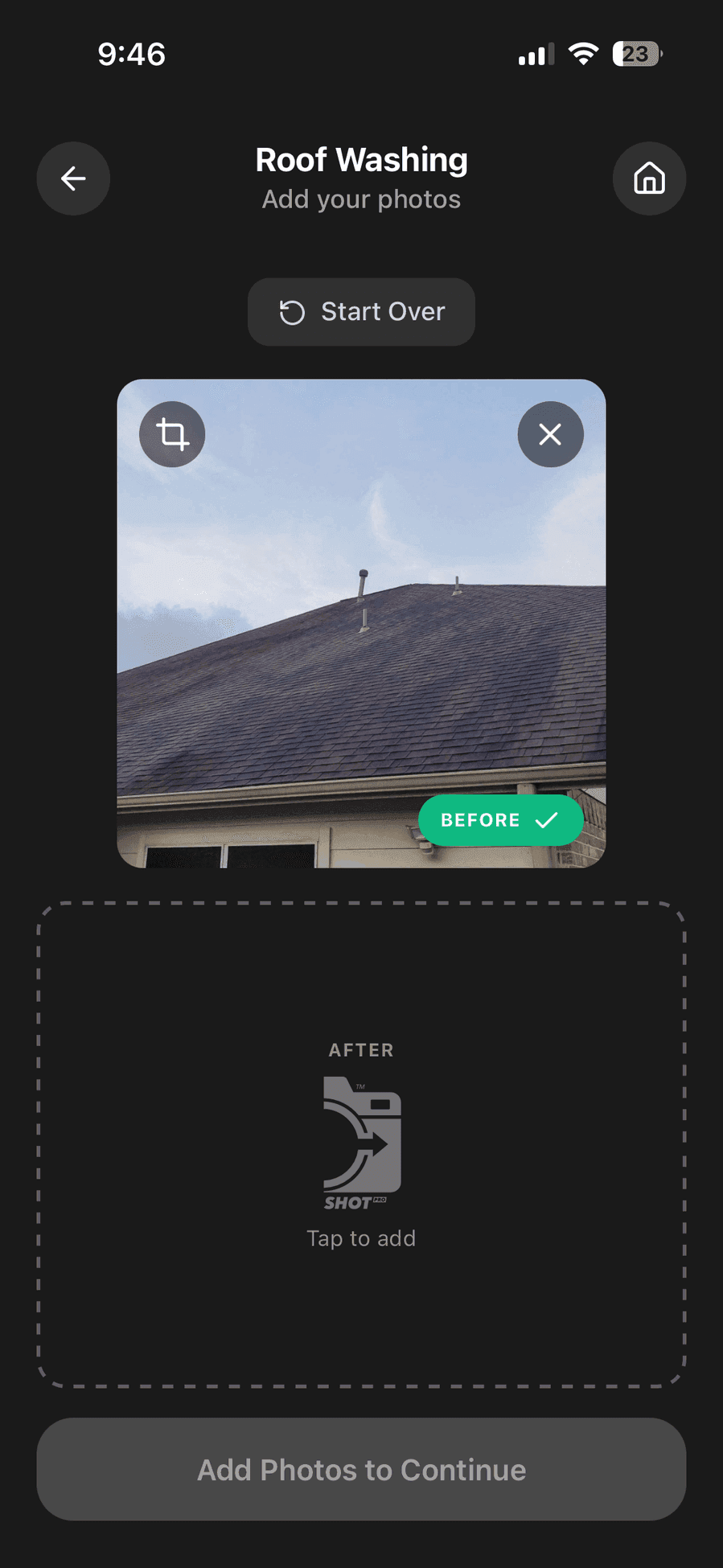
- The before and after combine into one branded image — logo on, ready to text a customer or post.
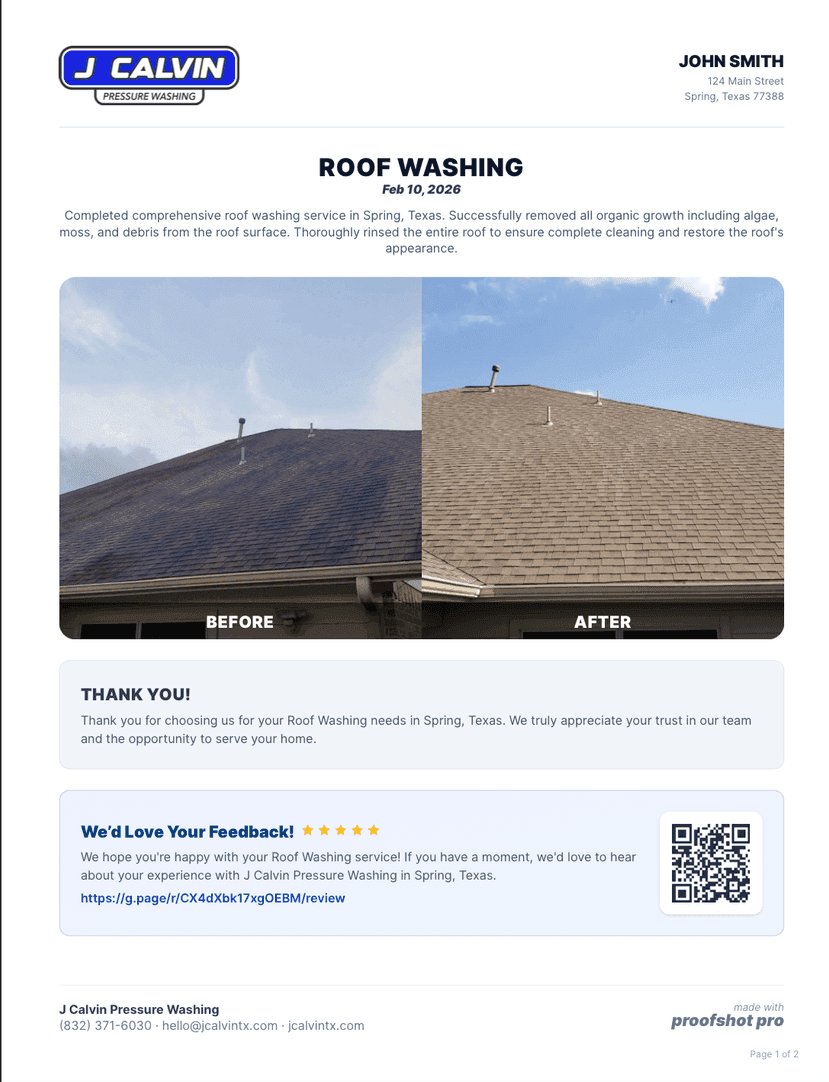
- It generates a PDF report with the customer's details and a QR code straight to our review page — the leave-behind version of the same proof.
- Everything is timestamped, which has a way of ending payment arguments before they start.
The design goal we built backwards from: job site to sent proof in thirty seconds. That's the target the thing was shaped around — I haven't put a stopwatch on it, so I won't claim I hit it. What I'll claim is the part I can see: the digging is gone.
There's exactly one piece of AI in it — it drafts the social caption if you ask. The front page of this site opens with "AI this. Automation that." and I stand by it: the AI here is a small tool doing one specific job, not the point.
What it changes
Which brings back that driveway review. We ask happy customers to attach the photos because a review that shows the work sells harder than one that describes it — that's not a statistic, it's just why we ask. What I can tell you literally is this: the two photos in that text came straight out of the app, the ask took one text, and the review they landed in sits on our Google listing now, where every future customer can find it.
Same goes for the website: the branded before-and-afters now exist the moment the job ends, instead of two phones and a text thread deep.
Full disclosure: it's ours
The app is called ProofShot Pro — proofshotpro.com. My business partner and I built it this year because we needed it, it ran on our own jobs this season, and we've just opened the doors to other contractors. It's young, and there's a free plan. That's the whole pitch — this site isn't for selling you software.
Update, August 2026: the app has kept growing since this note went up — cloud sync across devices, team accounts with roles and invites, and a native iOS app submitted to the App Store. Still young; still a free plan.
If your best work is buried in a camera roll
The takeaway isn't "go get my app." It's this: your best marketing already happened — on today's job, and yesterday's, and last month's. The only question is whether you can put your hands on it while it still matters — while the customer is deciding, while the review ask is warm, while the website needs exactly that photo.
If you can't, it doesn't exist. Design the retrieval, not the archive — an app, a shared album with a naming rule you'll actually keep after a long day, whatever survives contact with your real week. The photos were never the asset. Finding them is.
Next step
Let's cut through the noise.
Tell me the pain you're feeling, and in 30 minutes I'll help you see the path forward. No strings.